Anita Vogel from Fox News Opens Up About Her Husband’s Death After Returning to Work
Anita Vogel, a respected journalist and anchor at Fox News, recently made her first public statement following the tragic death of her husband. After taking some time away from the spotlight to grieve, Vogel has returned to her hosting role, where she courageously addressed the emotional impact of her loss. In her heartfelt remarks, she revealed that she is struggling to come to terms with the final wish her late husband left behind. This article delves into Anita Vogel’s journey through grief, her return to the newsroom, and the powerful message she shared with viewers.
Anita Vogel’s First Statement After Her Husband’s Passing

The news of Anita Vogel’s husband passing away came as a shock to many fans and colleagues alike. Known for her composed and professional demeanor on air, Vogel’s recent statement showed a deeply personal side of the journalist. Upon her return to Fox News, she expressed that despite the pain, she is committed to continuing her work while honoring her husband’s memory. However, she also revealed a profound struggle: “I can’t accept the final wish he left behind.”
This poignant admission has resonated with many who have experienced loss, highlighting the complexity of grief and the difficulty in fulfilling last requests that may be emotionally challenging. Vogel’s openness has sparked conversations about coping with bereavement and the importance of support during such times.
How Anita Vogel is Coping and Moving Forward

Returning to work after such a personal tragedy is never easy, yet Anita Vogel has demonstrated remarkable strength. She has leaned on her close friends, family, and professional support systems to navigate the difficult days. Vogel’s decision to share her feelings publicly is a testament to her resilience and willingness to connect with others facing similar hardships.
In interviews following her statement, Vogel emphasized the importance of allowing oneself time to grieve and the value of community support. She also encouraged viewers to seek help when dealing with loss, underscoring that healing is a gradual process. Her candidness serves as an inspiration to many, reminding us that even in moments of sorrow, there is hope for recovery and renewal.
The Impact of Vogel’s Statement on Viewers and the Media Community

Anita Vogel’s heartfelt message has touched a wide audience, from loyal viewers to fellow journalists. Many have praised her for her vulnerability and courage in discussing such a sensitive topic on a public platform. Her statement has also brought attention to the challenges faced by those in the media industry who often must maintain professionalism while dealing with personal grief.
The response from the media community has been overwhelmingly supportive, with colleagues expressing empathy and solidarity. Vogel’s story has opened up broader discussions about mental health, grief counseling, and the importance of workplace support for employees coping with loss.
Understanding the Significance of Anita Vogel’s Husband’s Final Wish
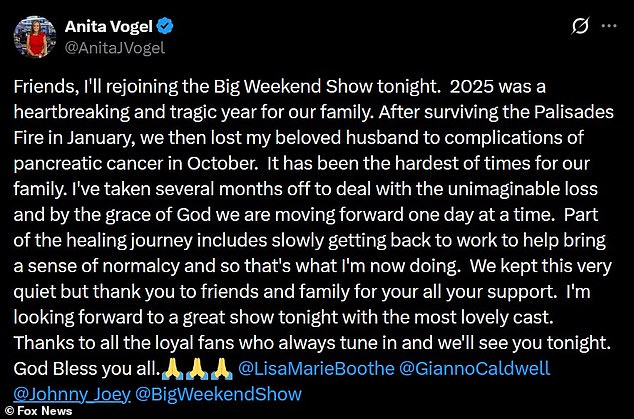
One of the most compelling aspects of Anita Vogel’s statement is her struggle to accept her husband’s final wish. While she has not disclosed the specific details publicly, the emotional weight of this wish is evident. It serves as a reminder that the wishes left behind by loved ones can sometimes be difficult to fulfill, especially when they challenge our own beliefs or emotional capacity.
This element of Vogel’s story highlights a universal experience in grief: the tension between honoring a loved one’s last requests and managing one’s own emotional well-being. It encourages a compassionate approach to grief, recognizing that each person’s journey is unique and that acceptance takes time.
What We Can Learn from Anita Vogel’s Experience

Anita Vogel’s openness about her loss and the complexities of grief offers valuable lessons for anyone facing similar circumstances. Her experience teaches us the importance of:
– Allowing ourselves to feel and express grief without judgment.
– Seeking support from friends, family, or professionals.
– Recognizing that it’s okay to struggle with certain aspects of loss, including fulfilling final wishes.
– Finding strength in vulnerability and sharing our stories to help others.
By embracing these lessons, we can foster a more empathetic and supportive environment for those navigating the difficult path of bereavement.
Conclusion
Anita Vogel’s heartfelt first statement after her husband’s death reveals the profound challenges of coping with loss while maintaining a public role. Her refusal to accept her husband’s final wish underscores the emotional complexity of grief and the importance of compassion for oneself during such times. As she continues her journey, Vogel’s courage and honesty serve as an inspiration to many.
If you or someone you know is struggling with grief, remember that support is available. Don’t hesitate to reach out to loved ones or professional counselors to help navigate this difficult time. Sharing your story, like Anita Vogel, can be a powerful step toward healing.